

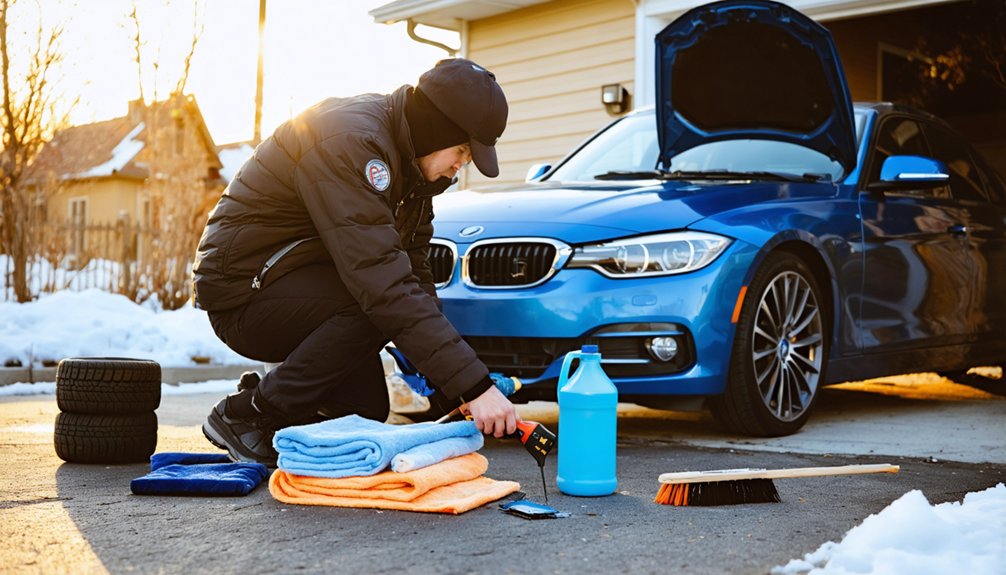

Prepare vehicles seasonally: spring wash and undercarriage rinse to remove salt, inspect tires and rotate; summer check A/C, coolant, belts and use correct coolant mix; fall test heater, battery, lights, replace wipers and switch to winter washer fluid; winter load-test battery, fit snow tires if below 45°F, monitor tire pressure for −1 PSI/10°F, and keep antifreeze and fluids at spec. Maintain brakes, fluid schedules and documented inspections year-round for safety and resale — more detailed steps follow.
Key Takeaways
- Check tire pressure and tread; rotate tires seasonally and install dedicated snow tires below 45°F if needed.
- Test battery (especially if older than 3 years), clean terminals, and keep jumper cables accessible.
- Inspect coolant, hoses, belts, and use manufacturer-recommended antifreeze concentration for freeze/overheat protection.
- Replace wiper blades every 6–12 months, top off freeze-resistant washer fluid, and repair windshield chips immediately.
- Inspect brakes, undercarriage, and remove road salt; apply corrosion prevention to vulnerable components before winter.
Spring Undercarriage and Tire Care
In spring, attention turns to undercarriage and tire care to reverse winter damage and restore safe performance.
The process begins with undercarriage detailing: prop the vehicle on a jack or ramp, then use a high-pressure hose to remove road salt from wheel wells, suspension components, frame, and crossmembers. Timing is key—clean after roads are no longer salted to prevent recontamination. It’s also wise to check for rust in hidden areas while the undercarriage is exposed.
Next, conduct a focused inspection for corrosion, pothole-related structural damage, compromised suspension parts, and fluid leaks near steering or mounting points.
Tire procedures include tire beadcare checks, pressure optimization to manufacturer PSI, tread evaluation with a penny or digital gauge, and scheduled rotation every 5,000–7,500 miles. Monthly monitoring fosters community-standard safety and prolongs component life. Replace your cabin Additionally, check and top off fluids like coolant level to ensure systems operate properly after winter.
Preparing Your Cooling and AC System for Summer
After undercarriage and tire checks, attention shifts to the cooling and air-conditioning systems to guarantee reliable cabin comfort and engine temperature control for summer.
The vehicle owner follows a checklist: perform AC diagnostics to verify cold output, detect weak airflow, unusual noises, or musty odors; replace the cabin air filter annually and clean upholstery to sustain airflow and interior air quality. Regular professional inspections can catch issues early, especially cooling system problems linked to high temperatures.
Inspect coolant level, radiator, hoses, belts and perform a coolant flush if fluid has degraded.
Monitor refrigerant levels; address leaks and arrange professional refrigerant recharge when necessary to avoid warm air and compressor damage. Replace filters regularly and inspect seals.
Verify A/C component mounts, service port caps, and compressor operation.
Deodorize ducts and schedule timely repairs to maintain summer-ready performance and group safety.
Also consider a battery efficiency test to avoid unexpected failures during peak heat.
Fall Heating, Oil, and Lighting Checks
Regularly scheduled fall checks guarantee the heating, oil, and lighting systems are prepared for colder, darker months.
A checklist approach guarantees heater diagnostics include blower motor, controls, defrosters, cabin air filter condition, vacuum hoses, and fuse integrity; address faults before severe cold. ASE-certified technicians can perform these diagnostics and repairs to ensure reliable operation. Batteries older than three years should be tested before cold weather sets in.
Oil service should follow manufacturer intervals: change oil and filter, consider winter-weight oil, maintain proper oil level, and keep the gas tank at least half full to limit moisture. Keep jumper cables
Lighting inspection covers all exterior and interior lamps, dashboard illumination, wiring connections, and bulb alignment to maximize nighttime visibility; replace burnt-out bulbs immediately.
Wiper and washer fluid readiness complements visibility.
This compact routine fosters confidence and community among drivers who share seasonal maintenance standards.
Winter Battery, Antifreeze, and Tire Prep
Because cold dramatically reduces starting power, drivers must prioritize winter battery checks, antifreeze concentration, and tire readiness to guarantee reliable cold-weather performance.
Acknowledging group responsibility, technicians recommend prewinter battery load testing to detect capacity loss (up to 50%) and rising minimum state-of-charge needs for cold starts; corrosion removal, secure terminals, fluid coverage, and alternator verification reduce failure risk and inform timely battery replacement decisions.
Coolant protocols call for 50/50 antifreeze with distilled water, cold-engine level checks, annual protection testing, and manufacturer-specified formulations to prevent freezing, corrosion, and overheating.
Tire strategy emphasizes dedicated snow tires with flexible rubber below 45°F, minimum 6/32-inch tread, monthly pressure checks (−1 PSI per 10°F), spare monitoring, and alignment correction for uneven wear to maintain traction and community safety. Technicians also advise checking tire pressure regularly to compensate for temperature-related pressure drops.
Year-Round Fluid and Brake Maintenance
Consistently monitoring and servicing engine oil, coolant, brake fluid, power steering fluid, and windshield washer fluid preserves performance across temperature extremes.
Vehicle owners are advised to follow manufacturer viscosity specs, prefer synthetic oils for stability, and use winter-grade options for cold starts.
Coolant requires periodic flushes and hydrometer-based fluid testing; inspect concentration biweekly during heat peaks.
Brake fluid absorbs moisture; replace per recommended intervals and perform brake bleeding when contamination or sponginess appears.
Inspect pads, rotors, hoses, caps, and reservoirs annually; account for desert or mountain driving that increases thermal stress.
Top off power steering and washer fluids more frequently in dry or cold climates.
Use seasonal changes as reminders for a thorough fluid assessment to maintain reliable, shared road readiness.
Managing Tire Pressure Through Temperature Changes
A single 50°F seasonal swing can alter tire pressure by about 5 PSI, driven by air contraction in cold and expansion in heat.
The section outlines measurable effects: roughly 1 PSI change per 10°F, additional 20°F rise from driving, and larger drops in sub-freezing conditions.
Routine seasonal pressure adjustment maintains safety, fuel economy, and tread life.
Recommended actions: check pressures monthly with a calibrated gauge when tires are cold (parked ≥3 hours); follow manufacturer specifications; avoid sidewall maxima.
After setting pressures, perform TPMS calibration or reset to make certain accurate alerts.
Attention to underinflation — common on 28% of vehicles — prevents increased rolling resistance, uneven wear, reduced braking, and heat buildup.
This concise plan fosters shared responsibility and confidence among drivers.
Wiper, Washer Fluid, and Visibility Upkeep
Regularly inspecting wiper blades, washer fluid, and windshield condition guarantees clear visibility across seasonal extremes.
Recommendations include scheduled wiper replacement every six months, and no later than 12 months, with winter-specific blades installed before cold weather to prevent rubber deterioration and ice buildup.
Clean blades and glass at each fuel fill-up; remove salt, debris, and interior dust to reduce streaking and glare.
Keep washer fluid reservoir stocked year-round and use appropriate freeze-resistant fluid in cold months.
Repair chips or cracks immediately and clean headlights and defroster vents to support overall visibility maintenance.
Use windshield covers or lift blades overnight in freezing conditions and never run wipers over ice; these steps foster shared responsibility and safer communal driving.
Preventive Inspections to Protect Resale Value
Often overlooked, preventive inspections form the backbone of resale value preservation by converting seasonal maintenance into verifiable proof of care.
A concise protocol emphasizes documented inspections for cooling, A/C, battery, tires, and fluid analysis before temperature shifts.
Electronic service summaries and invoices create a unified trail that affirms service continuity and reduces buyer skepticism.
Long-term tracking—timing belt, transmission, brakes, spark plugs, differential services—demonstrates component stewardship and supports premium pricing.
Pre-sale mechanical checks by certified technicians referenced in records add credibility during negotiations.
Seasonal entries proving tire rotation, battery replacement, and corrosion prevention address common weather-related concerns.
A structured, complete maintenance timeline fosters belonging among conscientious owners and helps vehicles command higher resale values through transparent, verifiable care.
References
- https://branfordcarwashandexpresslube.com/seasonal-car-maintenance-preparing-your-vehicle-for-weather-changes/
- https://mattsautoservicecenter.com/the-ultimate-guide-to-seasonal-car-maintenance/
- https://woodlandscarcare.com/the-ultimate-guide-to-seasonal-car-maintenance/
- https://allaroundautorepair.com/the-impact-of-seasonal-changes-on-vehicle-maintenance/
- https://cruzenapp.com/seasonal-car-maintenance-tips/
- https://simonsautorepairtaunton.com/blog/seasonal-vehicle-maintenance-checklist/
- https://www.infinitioflexington.com/blogs/5554/seasonal-maintenance-tips-preparing-your-car-for-winter-with-infiniti-maintenance
- https://www.robgreennissan.com/blogs/7349/seasonal-car-maintenance-tips/
- https://www.fusionautofinance.com/2025/02/25/spring-car-maintenance-checklist/
- https://blog.battlegroundkia.com/spring-car-maintenance-checklist/